Written by the team at Domestic Group+ (Domestic Heating Team Ltd), NICEIC certified and OZEV approved EV charge point installers based in Hertford, Hertfordshire. Last updated September 2026.
Quick answer (TL;DR)
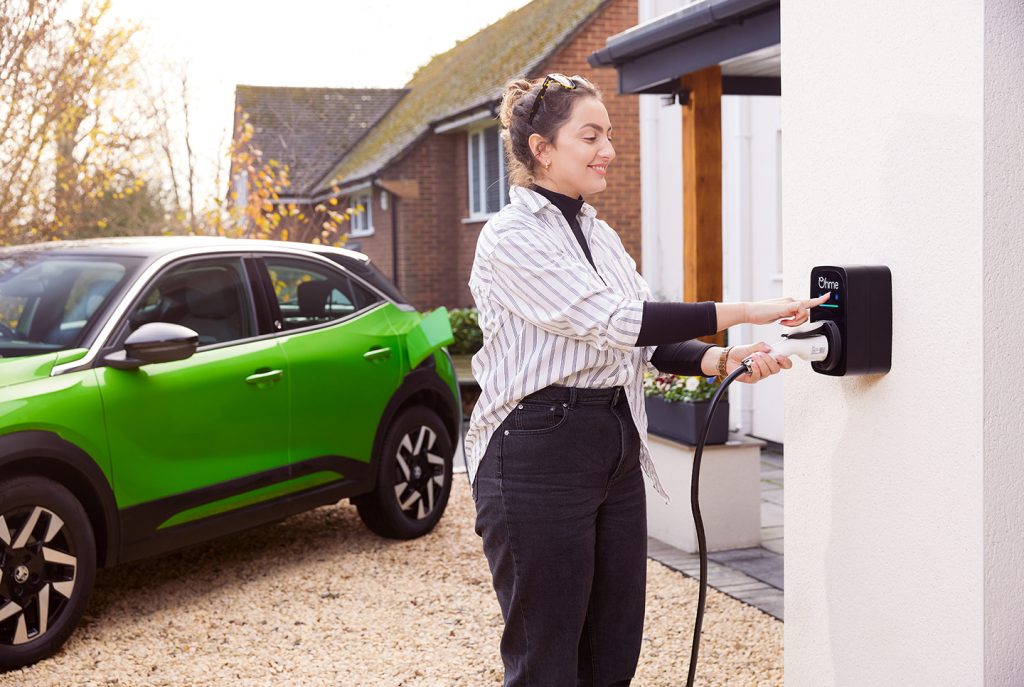
If your home EV charger is not working, the cause is usually one of eight things: the built in randomised start delay (a legal requirement, not a fault), a tripped RCD or RCBO in your consumer unit, the wrong type of RCD fitted to the charger circuit, a fault inside the car rather than the charger, water ingress in the unit or connector, a lost Wi Fi or 4G connection stopping the app from authorising a charge, a firmware update that has stalled, or a damaged tethered cable. Roughly half of home charger call outs are fixed without replacing the unit. Expect to pay in the region of £80 to £150 for a diagnostic visit in Hertfordshire and the South East, and £500 to £900 for a full replacement charge point fitted. If your consumer unit still has an old Type AC RCD protecting the charger circuit, that is very likely your nuisance tripping problem and it is not something to ignore.

Start here: is it actually broken?
Before you assume the worst, run these three checks. They resolve a surprising number of “dead charger” calls.
- Wait ten minutes. This is the single most misdiagnosed “fault” in UK homes. Under the Electric Vehicles (Smart Charge Points) Regulations 2021, every smart charge point sold for private use in Great Britain must apply a randomised delay of up to 600 seconds before it starts drawing power. The delay is randomly generated each time and exists to stop thousands of chargers switching on at the same second when an off peak tariff window opens. Your charger is doing exactly what the law requires. Most units let you cancel the delay from the app or by pressing the boost or charge now button.
- Try a different car, or a different charger. If a friend’s EV charges fine on your unit, the fault is in your vehicle. If your car charges fine on a public rapid or a neighbour’s home unit, the fault is in your installation.
- Look at the consumer unit. Find the breaker labelled for the EV circuit. If it has tripped, that is your headline symptom and the sections below tell you what it usually means.
The 8 most common home EV charger faults
| No. | Symptom you see | Most likely cause | Fix | Job for you or an engineer? |
|---|---|---|---|---|
| 1 | Nothing happens for several minutes after plugging in | Randomised start delay under the 2021 smart charging regulations | Press boost or charge now in the app | You |
| 2 | Charger trips the consumer unit as soon as the car connects | Inrush current tripping an undersized or wrong curve MCB or RCBO | Device reselected and the circuit re verified | Engineer |
| 3 | Charger trips a few minutes into every charge | DC leakage from the car’s onboard charger hitting an RCD that cannot handle it | Correct Type A RCBO plus a charge point with an integral 6 mA RDC DD | Engineer |
| 4 | Random trips, worse in wet weather | Water ingress at the enclosure, gland, connector face or cable entry | Reseal or replace the affected part, re test insulation resistance | Engineer |
| 5 | Charger works but the app will not connect | Lost Wi Fi, weak signal at the driveway, or a router change | Reconnect to Wi Fi, or fit a mesh point or booster | You, mostly |
| 6 | Unit stuck on one solid or flashing colour after an update | Stalled firmware update | Power cycle at the isolator, then re run the update | You, then engineer if it repeats |
| 7 | Error on the car dash, charger looks fine | Control pilot or proximity pilot fault in the cable or connector | Replace the tethered cable or connector assembly | Engineer |
| 8 | Charger completely dead, no lights at all | Failed internal PCB, blown supply side device, or a supply fault | Diagnostic test, then repair or replace | Engineer |
Why does my EV charger keep tripping the RCD?
This is the most common genuine fault we are called out to, and there is a specific technical reason behind it that most homeowners are never told.
An EV draws a heavy, continuous current for hours at a time. The onboard charger inside the car uses power electronics that can leak a small amount of smooth DC current back down the earth path. A very small DC leakage is normal and harmless. The problem is what your consumer unit does with it.
Type AC RCDs, which were the standard fit in UK homes before around 2020, cannot cope with this. A smooth DC component effectively blinds them, and they either nuisance trip or, far more seriously, fail to trip at all when they should. That is why BS 7671 does not permit a Type AC RCD on an EV charge point circuit.
Here is what should be protecting your charger instead.
| RCD type | Detects | Suitable for an EV charger circuit? |
|---|---|---|
| Type AC | AC fault current only | No. Not acceptable on an EV charge point circuit under any current edition of BS 7671 |
| Type A | AC and pulsating DC fault current | Yes, but only when the charge point has an integral RDC DD that detects smooth DC at 6 mA |
| Type B | AC, pulsating DC and smooth DC fault current | Yes. Required where the charge point has no integral RDC DD, or on some three phase installs |
| Type F | AC, pulsating DC, mixed frequency | Only where the equipment manufacturer specifically calls for it |
Nearly every 7.4 kW charge point sold in the UK today has that 6 mA detection built in, which is why a 30 mA Type A RCBO on the EV circuit is the standard domestic arrangement. If yours is on an old Type AC device, or worse, shares an RCD with half the house, that needs putting right. It is a safety issue as much as a convenience one.
One more thing worth knowing: the rules changed in 2026
The IET and BSI published Amendment 4 to BS 7671:2018 on 15 April 2026. The previous version, BS 7671:2018+A2:2022+A3:2024, remains valid until 15 October 2026, when it is withdrawn. Amendment 4 rewrote the earthing rules for outdoor charge points on PME (TN C S) supplies, which is what most UK homes have. The old “not reasonably practicable” exception was deleted, so new installations must now use one of the explicit routes: a dedicated earth electrode, a 70 V open PEN protective device, or a voltage limit device.
What this means for you in plain English: a charger installed a few years ago is not suddenly dangerous. But if yours is being repaired, altered or replaced now, the work should be designed to the current standard, and an installer who cannot tell you which earthing route your charge point uses is not the installer you want on your driveway.
Is my EV charger fault or is it the car?
It is genuinely often the car, and manufacturers rarely make this easy to work out.
Signs it is more likely to be the vehicle:
- The same fault follows the car to public chargers and other home units.
- Charging stops at the same state of charge every time, which usually points to battery management rather than supply.
- The car shows a specific charging error code while the charge point reports no fault.
- Charging works on AC at home but fails on DC rapid, or the reverse.
Signs it is more likely to be the charge point or the installation:
- Other EVs fail on your unit too.
- The breaker in your consumer unit trips, which the car cannot cause on its own without a real leakage or overload path.
- The problem correlates with weather, which points at water ingress.
- The unit’s status light or app shows a fault code and the car shows nothing.
A decent diagnostic visit checks both ends. We test the circuit, the earthing arrangement, insulation resistance, the RCD trip timing and the charge point’s own self test, then simulate the control pilot signal to see whether the unit energises correctly. That last step is what separates a proper EV diagnostic from someone flicking the breaker back on.
Can I fix an EV charger myself?
You can safely do the following:
- Reset the breaker once, and see whether it holds.
- Power cycle the unit at its isolator.
- Reconnect the charger to your Wi Fi and re run a firmware update.
- Check the connector face and pins for dirt, grit or standing water, and dry them.
- Inspect the tethered cable along its full length for cuts, crush damage or exposed conductors.
- Check the unit is not being blocked by a load balancing setting or a scheduled charge window you forgot about.
You should not open the enclosure, replace the tethered cable, change any device in the consumer unit, or repeatedly reset a breaker that keeps tripping. Fixed electrical work on a charge point circuit is notifiable under Part P of the Building Regulations, needs certifying to BS 7671, and a repeatedly tripping RCD is telling you something real. Resetting it over and over is the electrical equivalent of taping over a warning light.
Do EV chargers need servicing?
There is no legal requirement to service a domestic EV charge point, which is why most people never do. That said, a charge point lives outdoors, carries 32 A for hours at a stretch, and has moving parts in the connector. A check every couple of years is sensible, and manufacturers generally require the RDC DD self test function to be exercised periodically to keep the warranty valid.
A sensible EV charger service covers:
- Visual inspection of the enclosure, glands, cable entries and mounting.
- Connector and pin inspection for pitting, heat damage or corrosion.
- Insulation resistance and earth fault loop impedance testing.
- RCD trip timing at rated and five times rated current.
- Charge point self test, including the DC leakage detection function.
- Firmware check and update.
If you already run a service plan mindset for your heating, the same logic applies here. We wrote about that trade off in detail in our guide to whether boiler cover is worth it, and the same question of planned maintenance against reactive call outs is worth asking about your charge point.
What does EV charger repair cost in the UK?
Prices vary by region and by unit, but these are the ranges we see across Hertfordshire, north London and the wider South East in 2026.
| Job | Typical cost | Notes |
|---|---|---|
| Diagnostic visit | £80 to £150 | Often credited against the repair if you proceed |
| Consumer unit device change to a Type A RCBO | £150 to £300 | Common fix for nuisance tripping on older boards |
| Tethered cable or connector replacement | £120 to £350 | Depends heavily on the brand and whether the part is user replaceable |
| Reseal or minor water ingress repair | £100 to £250 | Usually needs the circuit re testing afterwards |
| Full charge point replacement | £500 to £900 fitted | Our published standard installation is £899 including the charger |
A repair is usually worth it if the unit is under about six years old, the manufacturer still supports the firmware, and the fault is in the cable, connector or protective device rather than the main board. Replacement usually wins when the main PCB has failed on an out of warranty unit, or where the model has been discontinued and parts are no longer available.
One thing worth checking before you replace: if you own or rent a flat, or your property has no private off street parking and you need a cross pavement solution, the government EV chargepoint grant rose from £350 to £500 per socket on 1 April 2026 and is confirmed at that rate until 31 March 2027. It covers 75% of the combined hardware and installation cost up to that ceiling. Homeowners with a private driveway in a house are not eligible, which catches a lot of people out.
If you are pricing up a like for like replacement, our full home EV charger cost breakdown for 2026 walks through every line item, including the DNO notification and consumer unit upgrades that quotes often hide.
Getting your charger fixed in Hertfordshire
Domestic Group+ is an OZEV approved and NICEIC certified installer based in Hertford, covering Hertfordshire, north London and the surrounding counties. We do not just fit charge points, we diagnose and repair them, including cable replacements, protective device upgrades and firmware issues, on any make we can safely support.
If your charger has stopped working, get in touch for an EV charger repair visit or read more about our EV charging installation and repair services across Hertfordshire. Call 01992 711711 and tell us the make, the model and what the status light is doing, and we will usually have a good idea of the fault before we arrive.
Thinking bigger about electrifying your home? Our guide to air source heat pump costs in 2026 covers the grants and the real numbers for the other half of the job.
FAQ
Why is my EV charger not starting straight away? Almost always the randomised start delay. Smart charge points sold in Great Britain must apply a random delay of up to 600 seconds before drawing power, under the Electric Vehicles (Smart Charge Points) Regulations 2021. You can cancel it from the app or with the boost button.
Why does my EV charger keep tripping the RCD? The most common cause in UK homes is an old Type AC RCD protecting the circuit. It cannot handle the small smooth DC leakage that comes back from a car’s onboard charger, so it trips intermittently. The fix is a correctly selected Type A RCBO paired with a charge point that has integral 6 mA DC detection, or a Type B device where the charge point does not have it.
Can I reset my EV charger myself? Yes, you can safely reset it once at the isolator or the breaker. If it trips again, stop and get it tested. A breaker that keeps tripping is detecting a real fault.
Is a broken EV charger dangerous? A charge point that is simply not communicating is not dangerous. One that trips repeatedly, shows scorch marks, has a hot connector, or has visible water inside should be isolated and looked at by a qualified electrician straight away.
How long do home EV chargers last? Most manufacturers design for around ten years of service, with warranties typically running three to five years. Connectors and tethered cables usually wear out first because they are handled daily.
Do I need a new EV charger if mine is out of warranty? Not necessarily. Cable, connector and protective device faults are all repairable well past the warranty period. Main board failures on discontinued models are usually the point at which replacement makes more sense.
Who can repair an EV charger in Hertfordshire? Any competent registered electrician can work on the circuit, but you want someone who is OZEV approved and works on charge points regularly, because the diagnostic sequence and the earthing rules under Section 722 of BS 7671 are specialist. Domestic Group+ covers Hertford, Ware, St Albans, Watford, Hemel Hempstead, Bishop’s Stortford and the surrounding area.