
Letting a property with gas appliances means one legal job you cannot skip. A valid CP12 landlord gas safety certificate protects your tenants and keeps you on the right side of the law. Miss it, and you risk unlimited fines and trouble regaining your own property.
This guide explains what the certificate is, what it costs, and how renewal works. You will also learn what happens if it lapses, and how to manage it across several properties.
What is a CP12 landlord gas safety certificate?
A CP12 landlord gas safety certificate is the official record of an annual gas safety check. A Gas Safe registered engineer issues it after inspecting your rental. It confirms that all gas appliances, pipework, and flues are safe to use. Its formal name is the Landlord Gas Safety Record.
The nickname CP12 comes from the old CORGI Proforma 12 form. CORGI was replaced by the Gas Safe Register in 2009.
Today, only a Gas Safe registered engineer can legally issue this certificate. You can check an engineer on the Gas Safe Register before they start.
Is a gas safety certificate a legal requirement for landlords?
Yes. A landlord gas safety certificate is a legal requirement across the UK. The duty comes from the Gas Safety (Installation and Use) Regulations 1998. According to GOV.UK, you must check every gas appliance and flue each year.
Regulation 36 places this duty on you, the landlord. The check must happen at least every 12 months. It covers every let property with gas, with no exemption for short or furnished lets.
If a letting agent manages your property, agree in writing who books the check. The Health and Safety Executive (HSE) enforces these rules.
How much does a CP12 gas safety certificate cost?
Expect to pay between £60 and £120 for a standard property. London and the South East sit at the higher end, often £80 to £150. According to recent 2026 cost guides, engineer overheads like parking push city prices up.
Several factors affect the final price:
- The number of gas appliances in the property
- The size of the property and how easy it is to access
- Your location, with London and the South East costing more
- How urgently you need the appointment
- Whether you bundle it with a boiler service
Remedial work is charged separately if the engineer finds a fault. Always ask for a clear quote before any repairs go ahead.
What does the gas safety check involve?
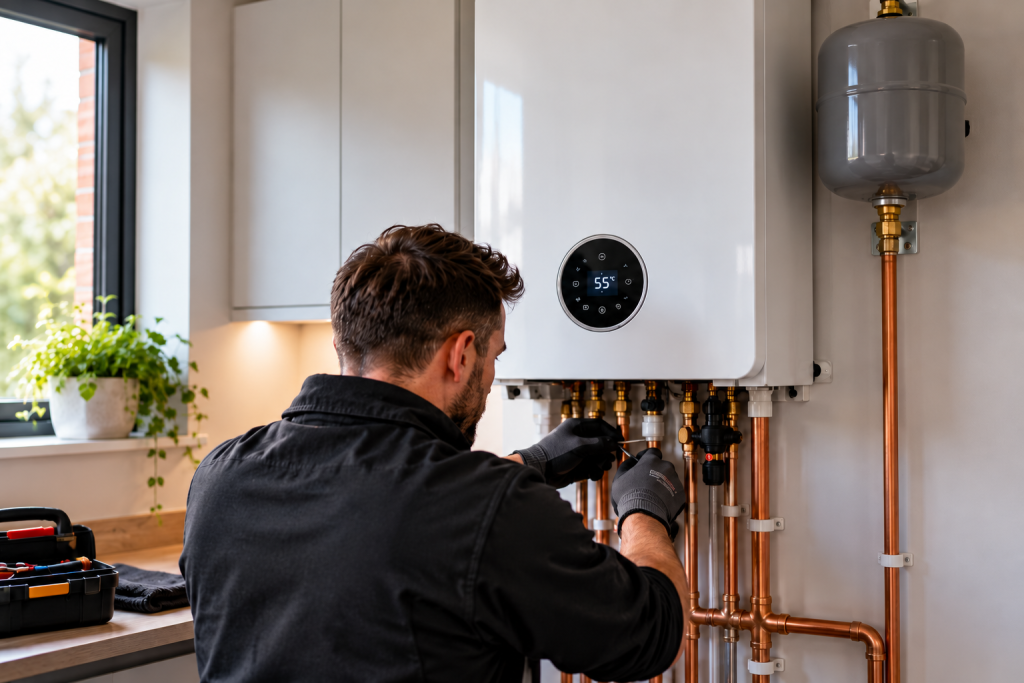
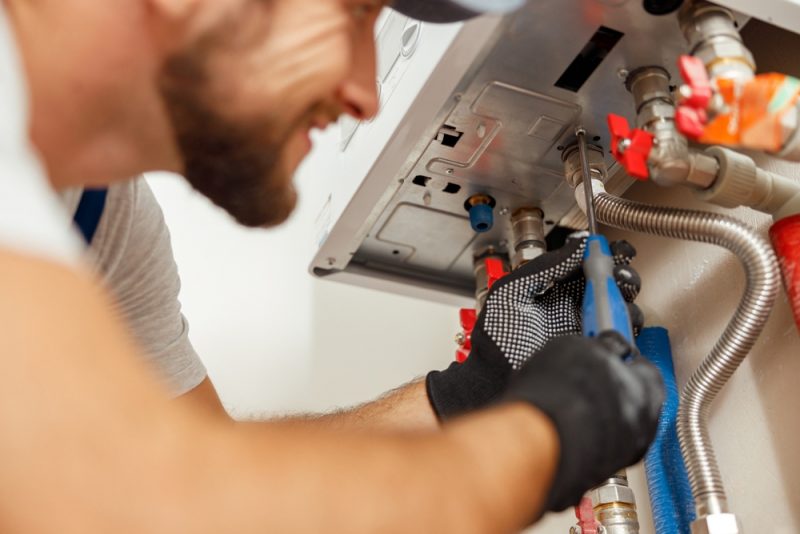
During the visit, a Gas Safe engineer inspects every gas appliance and its supply. They test for leaks, correct pressure, safe operation, and good ventilation. Most standard properties take 30 to 60 minutes.
Here is what the engineer checks:
- Every gas appliance, such as the boiler, hob, and gas fire
- The supply pipework and meter connections
- Flues and chimneys that carry fumes safely outside
- Ventilation around each appliance
- A tightness test that checks for gas leaks
Across the 1,000-plus properties our engineers visit each week, poor ventilation is a common reason for failure. Spotting it early saves you a second visit and keeps tenants safe.
When everything passes, you usually receive the certificate digitally the same day. If an appliance is unsafe, the engineer records it and may disconnect it. You then arrange the repair before it is used again.
How long is a CP12 valid, and how does renewal work?
Your CP12 is valid for 12 months from the date of the check. Renew it before it expires to stay compliant. A simple rule lets you book early without losing your renewal date.
Helpfully, you can carry out the check up to two months before expiry. You keep your original anniversary date when you do. This early-renewal rule came from a 2018 change to the regulations.
Picture a certificate that expires on 1 September:
- You book the new check any time from 1 July.
- The engineer visits on 15 July, and it passes.
- Your new certificate still expires on 1 September.
- You lose none of your 12 months.
Renewing more than two months early resets the cycle and shortens your year. Book in good time, because engineers fill up near peak dates.
Your obligations once you have the certificate
Issuing the certificate is not the end of your duties. You must share it with tenants and keep proper records.
Four rules apply once you hold the record:
- Give existing tenants a copy within 28 days of the check
- Give new tenants a copy before they move in
- Keep each safety record for at least two years
- Display a copy in a common area if the property is an HMO
Electronic copies are fine, as long as the tenant can access them. A clear record trail protects you if a dispute arises later.
What happens if you don’t have a valid CP12?
Failing to hold a valid certificate is a criminal offence. You face unlimited fines, and the HSE can prosecute serious cases. The most serious breaches can lead to imprisonment.
There is a possession risk too. Section 21 ‘no-fault’ evictions ended on 1 May 2026 under the Renters’ Rights Act 2025. Possession now runs through Section 8 grounds instead.
Courts can refuse a possession order if you cannot prove compliance. Staying current keeps your route to possession open. Most importantly, a valid check protects your tenants from carbon monoxide.
CP12 vs boiler service: what’s the difference?
These two jobs are often confused, but they are not the same. A CP12 is a legal safety check and record. A boiler service is maintenance that keeps your boiler running well.
| CP12 gas safety check | Boiler service | |
|---|---|---|
| Purpose | Confirms gas safety | Maintains performance |
| Legal status | Required by law for landlords | Optional but wise |
| What it covers | All gas appliances, flues, pipework | The boiler only |
| Frequency | Every 12 months | Usually once a year |
Booking both together often saves money and avoids a second visit. Our boiler service cover can run alongside your annual gas safety check.
Managing gas safety across a portfolio
Managing a single certificate is simple. The challenge comes with a whole portfolio of staggered renewal dates. Those dates are easy to lose track of.
One missed date can expose you to fines and possession problems. A single Gas Safe partner with account management removes that risk. We track every renewal and book each check before it lapses.
Pairing gas safety with wider compliance keeps everything under one provider. You can add PAT testing for your rental electrics at the same time.
The bottom line for landlords
Staying compliant is the one annual job you cannot afford to miss. A valid CP12 protects your tenants, satisfies the law, and keeps your right to possession. Get it done on time by a Gas Safe registered engineer.
Domestic Heating issues CP12 certificates as part of a full heating compliance service. Our Gas Safe registered engineers visit over 1,000 properties every week. Book your gas safety check, or ask about account-managed compliance for your portfolio.
How are you keeping track of your renewal dates this year?