Written by the Domestic Group team, Gas Safe registered heating engineers based in Hertford, Hertfordshire. Last updated August 2026.
Quick answer (TL;DR): In 2026, a new boiler costs most UK homeowners between £1,800 and £3,500 fully installed, with the typical combi swap coming in around £2,300. A simple like-for-like replacement sits at the lower end. System and regular boilers, premium brands, or jobs that involve moving the boiler or upgrading old pipework can push the total to £4,000 to £6,000 or more. Your final price comes down to three things: the type of boiler, the brand you choose, and how much work the installation actually involves.

If your boiler is limping into its second decade, breaking down every winter, or leaking (here is what to do when your boiler is leaking water), you are probably weighing up a replacement. This guide breaks down real 2026 prices so you know exactly what you should be paying before you get a quote.
How much does a new boiler cost in 2026?
For a straightforward combi boiler replacement fitted by a Gas Safe engineer, most people pay between £1,800 and £3,500. Industry data from thousands of 2026 quotes puts the median combi swap at roughly £2,300.
That headline figure covers the boiler unit itself, the flue and fittings, removal of your old boiler, all the labour, commissioning, your Gas Safe certificate, and warranty registration. A proper quote should include all of that, so if one looks suspiciously cheap, check what has been left out.
Here is how the numbers break down by boiler type.
| Boiler type | Typical installed price (2026) | Best suited to |
|---|---|---|
| Combi | £1,800 to £3,500 | Small and medium homes with one bathroom |
| System | £2,500 to £4,000 | Larger homes with two or more bathrooms |
| Regular (conventional) | £1,800 to £3,000 | Older heating systems, high hot water demand |
| Complex swap or conversion | £4,000 to £6,000+ | Boiler relocation, back boiler removal, regular-to-combi conversion |
New boiler cost by type: combi, system and regular
Combi boilers are the most popular choice in UK homes and usually the cheapest to fit. They heat water on demand with no separate cylinder or tank, so there is less kit to install. Expect £1,800 to £3,500 fully installed for a like-for-like swap.
System boilers work with a hot water cylinder and suit homes with two or more bathrooms, because they can run several taps and showers at once without losing pressure. Installed prices most commonly land between £2,500 and £4,000.
Regular boilers (also called conventional or heat-only) use both a cylinder and a cold water tank in the loft. They are common in older properties with traditional heating systems. A like-for-like regular boiler replacement usually costs £1,800 to £3,000.
The biggest jumps in price come from changing type rather than swapping like for like. Converting a regular boiler to a combi, moving the boiler to a new spot, removing an old back boiler, or rerouting the flue and upgrading tired pipework can all push a job toward £6,000.
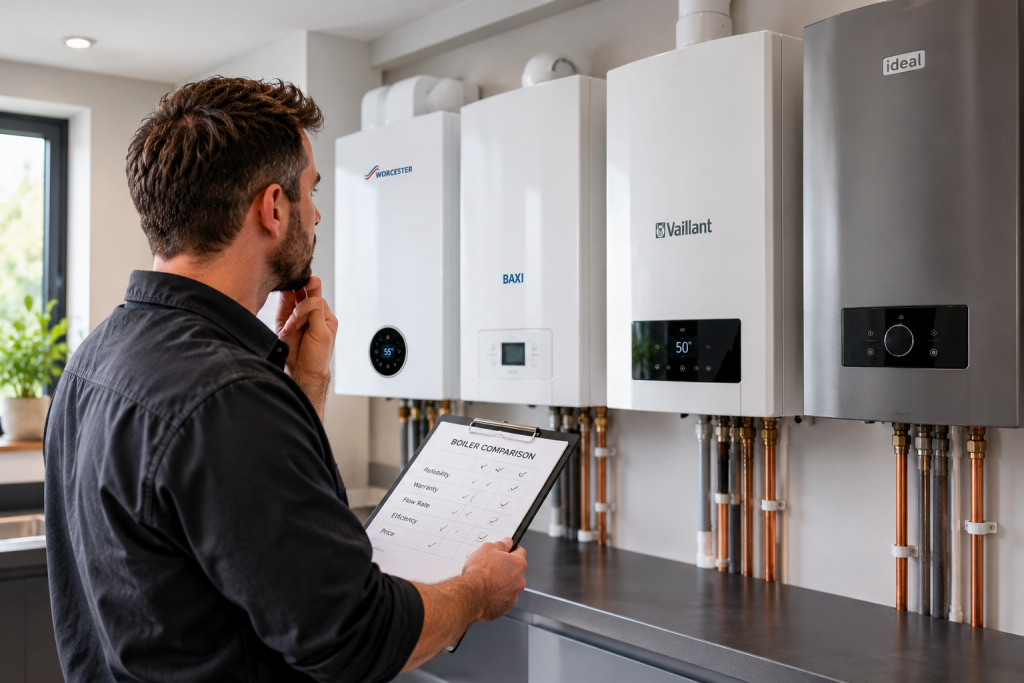
New boiler cost by brand
Brand makes a real difference to both the upfront price and the length of the warranty. Here are realistic fully installed prices for a mid-range combi in 2026.
| Brand | Tier | Typical fitted price (2026) |
|---|---|---|
| Baxi | Budget | From £1,800 |
| Ideal (Logic and Vogue) | Budget to mid | £1,900 to £2,800 |
| Vaillant (ecoTEC) | Mid | £2,100 to £3,200 |
| Worcester Bosch (Greenstar and 8000) | Mid to premium | £1,600 to £3,400 |
| Viessmann | Premium | £2,200 to £3,500 |
Budget brands such as Baxi and the Ideal Logic range keep the upfront cost down and are a sensible pick if you are staying in the home for the medium term. Premium models like the Worcester Bosch 8000 series or a Viessmann flagship cost more but tend to come with longer warranties (often up to 10 or 12 years when fitted by an accredited installer) and strong reliability records, which matters if you plan to stay put.
What affects the cost of a new boiler?
Two quotes for the “same” boiler can differ by hundreds of pounds. These are the factors that move the price:
- Boiler type and output. A higher kW output for a bigger home costs more than a compact combi for a flat.
- Brand and warranty. Premium units and longer guarantees add to the unit price.
- Like-for-like vs conversion. Swapping the same type in the same place is cheapest. Changing type or location adds labour and parts.
- Flue and pipework. A long or awkward flue run, or a system flush and new pipework, adds time and materials.
- Controls and extras. Smart thermostats, magnetic filters, and thermostatic radiator valves are often bundled in and worth having.
- Where you live. Labour rates vary across the country, and installers in and around London and Hertfordshire tend to sit slightly above the national average.
How much does boiler installation labour cost?
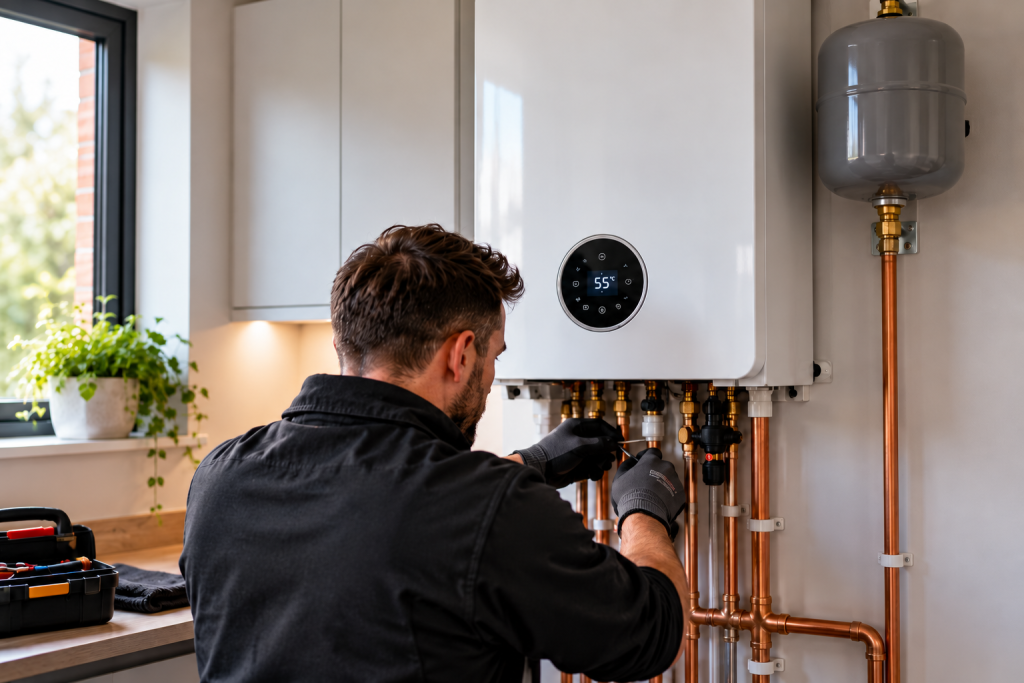
Labour is usually the second-biggest line on your quote after the boiler itself. For a standard installation, fitting typically adds £1,500 to £2,000 on top of the unit, spread across one to two days of work for a Gas Safe engineer.
More involved jobs, such as moving the boiler, converting from a regular to a combi system, or a full power flush of the central heating, add both time and cost. This is why a fixed, fully installed quote is always more useful than a boiler-only price. It tells you the real number you will pay.
Is it worth paying more for a premium boiler?
If you plan to stay in your home for years, a mid-range or premium boiler with a 10-year warranty often works out cheaper over its lifetime than a budget unit you might replace sooner. You are effectively paying upfront for reliability and peace of mind.
If you are on a tighter budget or may move soon, a well-installed budget boiler from a trusted brand like Baxi or Ideal will heat your home perfectly well. The quality of the installation matters just as much as the badge on the front. A great boiler fitted badly will still give you trouble, so choose your engineer as carefully as your brand.
Can you get a grant for a new gas boiler in 2026?
This is where a lot of confusion creeps in, so let us clear it up.
There is no grant for a new gas boiler. The government’s main scheme, the Boiler Upgrade Scheme (BUS), only helps you switch away from fossil fuels. It gives eligible homeowners in England and Wales up to £7,500 off an air source or ground source heat pump, £5,000 off a biomass boiler in rural off-grid homes, and £2,500 off an air-to-air heat pump. From 21 July 2026 to 31 March 2027, off-gas-grid properties heated by oil or LPG can claim a temporarily uplifted £9,000 grant for a heat pump.
If you are curious whether making the switch could pay off, our guide on heat pumps vs gas boilers and which is cheaper to run walks through the numbers, and we can talk you through heat pump installation in Hertfordshire if it looks like a fit.
What about the gas boiler ban? Despite the headlines, there is no ban on gas boilers in existing homes. When the government published its Warm Homes Plan in January 2026, it confirmed there is no phase-out date for gas boilers already installed. The plan uses grants to encourage heat pumps rather than a legal deadline, so you are free to replace your gas boiler like for like whenever you need to.
Should you repair or replace your boiler?
A new boiler is a big spend, so it is worth checking a repair will not do first. As a rule of thumb, replacement usually makes more sense when:
- Your boiler is over 10 to 12 years old and running at a lower efficiency than modern models.
- Repairs are becoming frequent and the bills are adding up.
- Parts are hard to source because the model is discontinued.
- Your energy bills have crept up as the boiler has lost efficiency.
- You are getting cold spots, strange noises, or a boiler that keeps losing pressure or leaking.
If your boiler is only a few years old and the fault is minor, a repair is almost always the smarter option. If you are seeing water pooling underneath it, read our guide on why your boiler is leaking water and how to fix it before you assume the worst.
How much can a new boiler save on your energy bills?
Older boilers lose efficiency as they age. A tired non-condensing boiler might run at around 70 percent efficiency, meaning roughly 30 pence in every pound is wasted. A modern A-rated condensing boiler runs at around 92 to 94 percent efficiency.
For a typical home, upgrading from an old, inefficient boiler to a new A-rated model can trim a meaningful chunk off your annual heating bill. The exact saving depends on your home, your usage, and your old boiler, but the efficiency gain is one of the main reasons a replacement pays for itself over time rather than being purely a cost.
Once your new boiler is in, keeping it serviced protects both the efficiency and the warranty. If you are weighing up a plan, our guide on whether boiler cover is worth it breaks down the options.
Getting a new boiler in Hertfordshire
At Domestic Group we install boilers across Hertfordshire and the surrounding areas, from Hertford and Ware to Hoddesdon, St Albans, and beyond. Every installation is carried out by our own Gas Safe registered engineers, with a fixed, fully installed quote so there are no surprises, and a tidy finish so you are up and running fast.
Whether you want a straightforward combi swap or advice on the right boiler for a bigger home, we can help you choose a model that fits your home and your budget. Get a free, no-obligation new boiler quote for your Hertfordshire home, or contact our team to book a visit.
Frequently asked questions
How much does a new combi boiler cost in the UK?
In 2026, a new combi boiler typically costs £1,800 to £3,500 fully installed, with the median swap around £2,300. Budget brands like Baxi start near £1,800, while premium Worcester Bosch or Vaillant models fitted can reach £3,200 to £3,500.
How much does it cost to install a boiler on its own?
Installation labour usually adds £1,500 to £2,000 on top of the boiler unit for a standard job, taking one to two days. Complex work such as moving the boiler or converting from a regular to a combi system costs more.
How long does a new boiler last?
A quality boiler that is serviced every year usually lasts 10 to 15 years. Premium models with longer warranties, looked after properly, can run reliably toward the top of that range.
Can I get a grant for a new gas boiler?
No. Grants such as the Boiler Upgrade Scheme only apply to low-carbon heating like heat pumps and biomass boilers, offering up to £7,500 off a heat pump in England and Wales. There is no grant for a straight gas boiler replacement.
Are gas boilers being banned in 2026?
No. The government’s Warm Homes Plan, published in January 2026, confirmed there is no phase-out date for gas boilers in existing homes. You can replace a gas boiler like for like whenever you need to.
What size boiler do I need?
It depends on your home’s size, number of bathrooms, and hot water demand. As a general guide, a 24 to 30 kW combi suits most one to two-bathroom homes, while larger homes with two or more bathrooms are often better with a 30 kW-plus combi or a system boiler. A Gas Safe engineer will size it properly during a survey.