TL;DR: A boiler leaking water is usually caused by high pressure, corroded pipes, worn seals, a faulty heat exchanger, or a frozen condensate pipe. Turn off your water supply and boiler immediately, then call a Gas Safe registered engineer. Repairs typically cost between £90 and £800 in the UK, depending on the cause. Need help now? Explore our heating services or call 0800 118 2718 for a free boiler check in Hertfordshire.
A boiler leaking water is one of the most common heating problems UK homeowners face, especially during winter. The seven main causes are: high boiler pressure, corroded pipes, worn seals and gaskets, a cracked heat exchanger, a blocked condensate pipe, a failed expansion vessel, and poor installation. If you spot a leak, turn off your water supply and boiler straight away. Then call a Gas Safe registered engineer to diagnose and fix the problem safely.
Table of Contents
- What Should I Do First If My Boiler Is Leaking?
- What Are the 7 Most Common Causes of a Boiler Leaking Water?
- Is a Leaking Boiler Dangerous?
- Can I Still Use My Boiler If It Is Leaking?
- How Much Does It Cost to Repair a Leaking Boiler in the UK?
- Should I Repair or Replace My Leaking Boiler?
- Top 10 Ways to Prevent Your Boiler From Leaking
- What Hertfordshire Homeowners Need to Know About Boiler Leaks
- Emerging Trends for Boiler Technology in 2026
- FAQs About Boiler Leaks
- Conclusion
What Should I Do First If My Boiler Is Leaking?
Here is the thing. A leaking boiler needs quick action. The longer you wait, the worse the damage can get. Water can ruin your floors, walls, and electrics. It can also cause mould to grow.
Follow these steps straight away:
- Turn off your water supply. Find the stopcock (usually under your kitchen sink) and turn it clockwise.
- Switch off your boiler. Use the on/off switch on the boiler or turn it off at the fuse box.
- Turn off your central heating. This stops hot water flowing through the system.
- Contain the leak. Put towels or a bucket under the drip to protect your floor.
- Check the pressure gauge. If it is above 2 bar, your pressure is too high.
- Call a Gas Safe registered engineer. Never try to fix a gas boiler yourself. It is illegal and dangerous.
You might be wondering if you can wait until Monday to get it fixed. The answer is no. A boiler leak can cause serious water damage within hours. It can also create electrical hazards if water reaches your boiler’s internal wiring.
What Are the 7 Most Common Causes of a Boiler Leaking Water?
Understanding why your boiler is leaking helps you explain the problem to an engineer. It can also give you an idea of repair costs. Here are the seven most common causes we see in Hertfordshire homes.
1. High Boiler Pressure
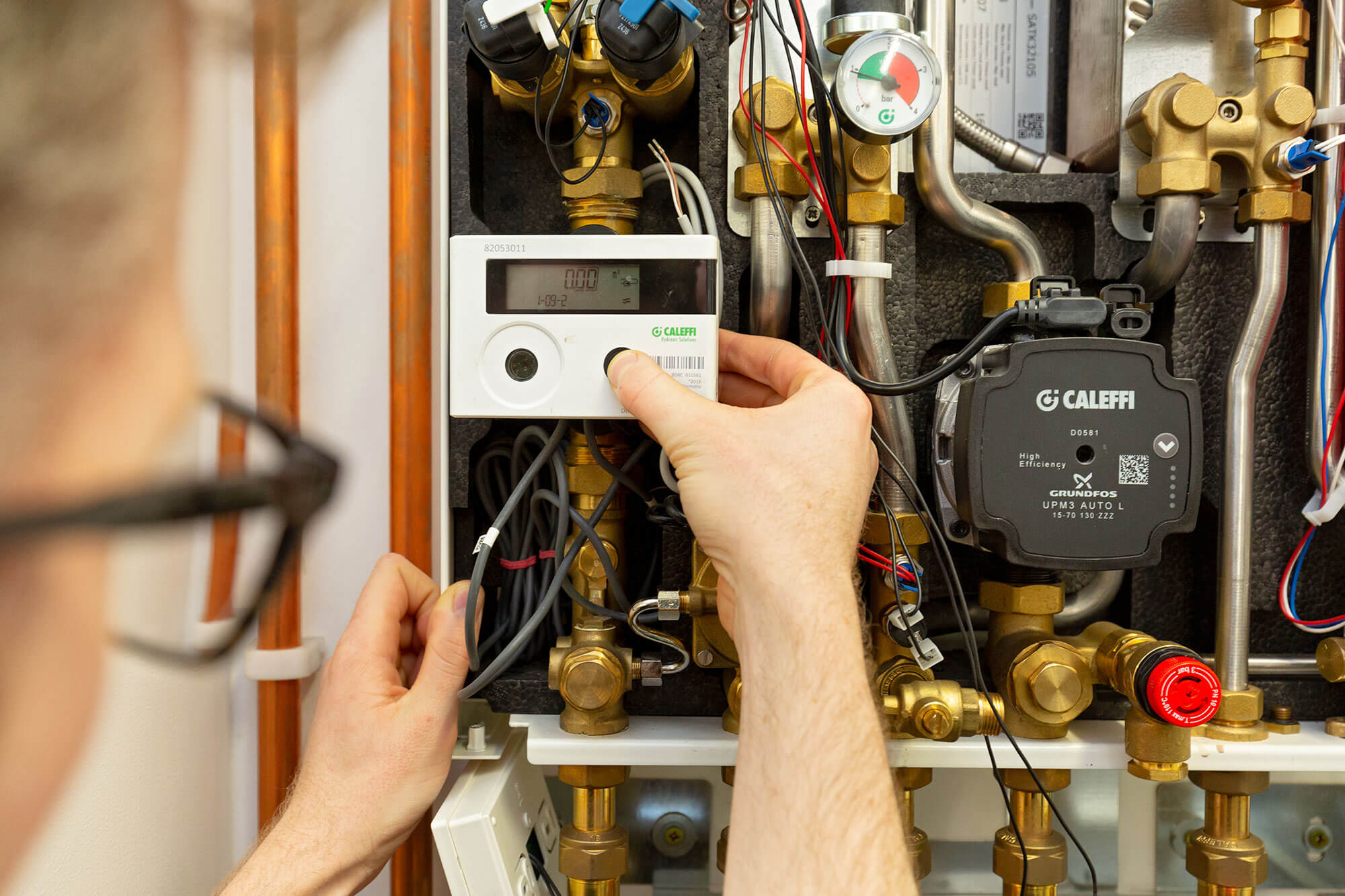
Your boiler has a pressure gauge on the front. It should read between 1 and 1.5 bar when the heating is off. If it goes above 2.5 bar, the pressure relief valve (PRV) will release water to protect your boiler from damage.
- Symptoms: Water dripping from a pipe on the outside wall, pressure gauge in the red zone.
- DIY check: Look at your pressure gauge. If it is above 2 bar, you may need to bleed your radiators.
- Professional fix: An engineer will check your expansion vessel and filling loop.
2. Corroded Pipes
Over time, the water in your central heating system reacts with metal pipes. This causes rust and corrosion. Eventually, tiny holes appear and water leaks out.
- Symptoms: Brown or discoloured water, leaks from pipe joints, visible rust.
- DIY check: Look for rust stains or green deposits on copper pipes.
- Professional fix: Corroded sections need replacing. A power flush can remove sludge from the system.
3. Worn Seals and Gaskets
Your boiler has rubber seals at every joint and connection. These seals stop water from escaping. After years of heating and cooling, they become brittle and crack.
- Symptoms: Small drips from connection points, water around the pump.
- DIY check: Feel around pipe connections for wetness.
- Professional fix: Replacing seals is a straightforward job for a qualified engineer.
4. Faulty Heat Exchanger
The heat exchanger is the heart of your boiler. It transfers heat from burning gas to the water. If it cracks, water leaks inside the boiler and drips out the bottom.
- Symptoms: Water leaking from the bottom of the boiler, no visible external damage.
- DIY check: You cannot check this yourself. It requires an engineer to open the boiler.
- Professional fix: Heat exchanger replacement costs £400 to £600. Sometimes a new boiler is more cost effective.
5. Blocked or Frozen Condensate Pipe
Modern condensing boilers produce acidic water as a byproduct. This drains through a plastic pipe, usually to an outside drain. In cold weather, this pipe can freeze and block.
- Symptoms: Boiler showing an error code, gurgling sounds, water backing up.
- DIY fix: Pour warm (not boiling) water over the frozen section of pipe.
- Prevention: Ask an engineer to insulate your condensate pipe before winter.
6. Failed Expansion Vessel
The expansion vessel absorbs pressure when water heats up and expands. If it fails, pressure builds up and forces water out through the PRV.
- Symptoms: Pressure keeps rising, PRV constantly dripping, pressure drops when heating is off.
- DIY check: Monitor your pressure gauge over a few days.
- Professional fix: An engineer can repressurise or replace the expansion vessel.
7. Poor Installation
If your boiler was recently installed and is already leaking, the problem is likely a loose fitting or connection. Even experienced engineers can miss a small leak during installation.
- Symptoms: Leaks appearing within weeks of installation.
- What to do: Contact your installer. They should return to fix the issue at no extra cost.
Is a Leaking Boiler Dangerous?
Yes, a leaking boiler can be dangerous if you ignore it. Here are the main risks to be aware of.
- Electrical hazards. Water and electricity do not mix. If water reaches your boiler’s wiring or nearby sockets, it can cause short circuits or fires.
- Water damage. Leaks can ruin flooring, skirting boards, and furniture. In flats, water can damage your neighbour’s property below.
- Mould and damp. Persistent leaks create a damp environment. Mould can grow within 24 to 48 hours and cause respiratory problems.
- Structural damage. Long term leaks can weaken wooden joists and plasterwork.
- Carbon monoxide risk. While rare, a cracked heat exchanger can potentially allow carbon monoxide to escape. According to the NHS, carbon monoxide poisoning kills around 60 people a year in England and Wales.
This is why we always recommend installing a carbon monoxide alarm near your boiler. At Domestic Heating, we offer carbon monoxide alarm installation for just £29.99. It could save your life.
Can I Still Use My Boiler If It Is Leaking?
The short answer is: it depends on the severity.
- Small drip from the PRV: You can use your boiler briefly, but book an engineer soon.
- Steady leak from the boiler casing: Turn off your boiler and call an engineer immediately.
- Water near electrical components: Do not use the boiler. Turn it off at the fuse box.
When in doubt, turn it off. A cold house for one day is better than a house fire or flood.
How Much Does It Cost to Repair a Leaking Boiler in the UK?
Boiler leak repair costs vary depending on the cause and your location. Here is a breakdown of typical costs in 2026.
| Repair Type | Typical Cost (2026) |
|---|---|
| Repressurising system (DIY) | Free |
| Replacing seals or gaskets | £90 to £150 |
| Fixing a leaking pipe joint | £100 to £200 |
| Thawing frozen condensate pipe (DIY) | Free |
| Replacing expansion vessel | £150 to £300 |
| Replacing pump | £200 to £350 |
| Replacing heat exchanger | £400 to £600 |
| Emergency call out (evenings/weekends) | £100 to £300 extra |
| Full system power flush | £300 to £500 |
What Do Hertfordshire Engineers Charge?
In Hertfordshire, expect call out fees of £60 to £100. Labour rates are typically £50 to £80 per hour. Most leak repairs take one to three hours.
Want to avoid unexpected repair bills? Our boiler service cover plans start from just £17 per month. This includes unlimited call outs, parts and labour, and an annual service.
Should I Repair or Replace My Leaking Boiler?
This is one of the most common questions we hear. Here is a simple guide to help you decide.
Consider repair if:
- Your boiler is less than 10 years old.
- The repair cost is less than 50% of a new boiler.
- This is the first major problem you have had.
- Parts are still available for your model.
Consider replacement if:
- Your boiler is over 15 years old.
- Repair costs exceed 50% of a new boiler price.
- You have had multiple breakdowns in the past year.
- Your boiler has an efficiency rating below A.
- Parts are discontinued.
A modern A rated boiler can save you £200 to £300 per year on energy bills. Over 10 years, that adds up to £2,000 to £3,000. Sometimes replacement makes financial sense even if your old boiler can be repaired.
Top 10 Ways to Prevent Your Boiler From Leaking
Prevention is always better than cure. Here are ten things you can do to reduce the risk of boiler leaks.
- Book an annual boiler service. A Gas Safe engineer will spot problems before they become leaks. Our annual service costs just £99.
- Check your pressure gauge monthly. Keep it between 1 and 1.5 bar.
- Bleed your radiators regularly. This removes air from the system and helps maintain correct pressure.
- Insulate your condensate pipe. Ask your engineer to lag it before winter arrives.
- Use a magnetic filter. This traps metallic debris and prevents sludge build up.
- Run your boiler monthly in summer. Even 30 minutes prevents seals from drying out.
- Keep the area around your boiler clear. Good ventilation prevents overheating.
- Do not ignore warning signs. Strange noises, pressure drops, and error codes need investigation.
- Consider a power flush every 5 to 10 years. This clears sludge from your entire central heating system.
- Get service cover. Our Boiler and Controls Breakdown Cover includes unlimited call outs and an annual service for £17 per month.
What Hertfordshire Homeowners Need to Know About Boiler Leaks
Living in Hertfordshire comes with some specific considerations for your boiler.
Hard water areas. Parts of Hertfordshire have very hard water. This causes limescale build up inside your boiler, which can damage the heat exchanger over time. A scale reducer or water softener can help.
Winter demand. Hertfordshire winters can be cold. Engineers get very busy between November and February. Book your annual service in summer or early autumn to avoid long waits.
Local case study. Last winter, a customer in St Albans called us on a freezing January morning. Their boiler had stopped working and water was dripping from the overflow pipe. Our engineer diagnosed a frozen condensate pipe and a failed expansion vessel. We thawed the pipe on site and replaced the vessel the same day. Total cost: £280. Without prompt action, the constant pressure cycling could have damaged the heat exchanger, turning a £280 repair into an £800 one.
At Domestic Heating, we are based in Hertfordshire and cover the entire county. Our Gas Safe registered engineers visit over 1,000 properties every week. We are accredited by TrustMark, NAPIT, and Safe Contractor, and we partner with leading manufacturers like Worcester Bosch, Vaillant, and Viessmann.
Emerging Trends for Boiler Technology in 2026
The heating industry is changing fast. Here is what you need to know about boiler technology in 2026.
Boiler Plus regulations. Since 2018, all new gas boilers must have a minimum 92% ErP efficiency rating. In 2026, there is growing pressure to meet even higher standards. Smart thermostats are now a requirement for most installations.
Heat pump transition. The government is encouraging homeowners to switch from gas boilers to heat pumps. While gas boiler replacements are still allowed in existing homes, new build properties are increasingly using low carbon alternatives. We offer air source heat pump installation and servicing through our renewables division.
Hydrogen ready boilers. Some manufacturers are now producing hydrogen ready boilers. These can run on natural gas now but can be converted to run on hydrogen in the future if the gas grid switches over.
Smart diagnostics. Modern boilers can connect to the internet and send diagnostic data to engineers. Some can even alert you to problems before a leak develops.
Remote monitoring. Smart thermostats can track your boiler’s pressure remotely. If pressure drops suddenly, you get an alert on your phone, often before you notice any leak.
FAQs About Boiler Leaks
Q: Is a boiler leaking water an emergency?
A: Yes, treat a boiler leak as urgent. Turn off your water supply and boiler straight away. Call a Gas Safe registered engineer as soon as possible. Delays can lead to electrical damage, water damage to your property, and more expensive repairs.
Q: Can I fix a leaking boiler myself?
A: Some tasks are safe for homeowners. You can repressurise your system, bleed radiators, or thaw a frozen condensate pipe. However, any work inside the boiler must be done by a Gas Safe registered engineer. It is illegal for unqualified people to work on gas appliances in the UK.
Q: Why is my boiler leaking from the bottom?
A: Leaks from the bottom usually indicate corroded internal pipes, a cracked heat exchanger, or a failing pump seal. These components are inside the boiler casing, so you will need an engineer to diagnose the exact cause.
Q: How long does a boiler leak repair take?
A: Simple repairs like replacing a seal take one to two hours. More complex jobs like replacing an expansion vessel take two to three hours. Heat exchanger replacement can take a full day. Most standard leak repairs are completed the same day.
Q: Will my home insurance cover a boiler leak?
A: Standard home insurance usually does not cover boiler repairs, but it may cover water damage caused by the leak. For boiler breakdown protection, you need dedicated boiler cover. Our plans start from £17 per month and include parts, labour, and an annual service.
Q: Can a leaking boiler explode?
A: Modern boilers have multiple safety features, including pressure relief valves, that prevent dangerous pressure build up. Explosions are extremely rare. However, leaks can still cause serious water damage and electrical hazards, so they need prompt attention.
Q: Is it worth repairing a 15 year old leaking boiler?
A: Generally, if repair costs exceed 50% of a new boiler’s price, or if your boiler is over 15 years old, replacement is often more cost effective. Modern A rated boilers are significantly more efficient and could save you £200 to £300 per year on energy bills.
Conclusion
A boiler leaking water is a common problem, but it should never be ignored. The seven main causes are high pressure, corroded pipes, worn seals, a faulty heat exchanger, a blocked condensate pipe, a failed expansion vessel, and poor installation.
If you spot a leak, turn off your water supply and boiler immediately. Contain the leak with towels or a bucket. Then call a Gas Safe registered engineer to diagnose and fix the problem.
Repair costs typically range from £90 for simple seal replacements to £800 for heat exchanger work. Prevention is the best approach. Book an annual service, check your pressure regularly, and consider a service cover plan for peace of mind.
Need Help With a Leaking Boiler?
Our Gas Safe registered engineers are ready to help homeowners across Hertfordshire. We offer same day call outs, transparent pricing, and service cover plans from £17 per month.
Call us on 0800 118 2718 or visit domestic-heating.co.uk/contact to book a free boiler check.